PDPX Platform: the multi-agent AI platform of ISDIN's digital team
In short
Dribba built PDPX Platform with ISDIN, the AI platform its digital team uses. A Figma frame or a PDF brief goes in and a validated, translated product page comes out: more than 890 so far, across 8 markets. Seven agents share the work, and the regulatory review checks every text against 13 regulations.
What the platform does
Alongside the app, we built with ISDIN the AI platform its digital team uses. It started with product pages: a Figma frame or a PDF brief goes in and a validated, translated product page comes out. It has produced more than 890, across 8 markets.
Seven agents share the work: one extracts the design without a language model, another checks content, structure and catalogue, and the rest handle translation, copy, medical affairs, the page header and the regulatory review, which checks every text against 13 regulations from different markets.
Over time the platform has grown into campaigns, emails and landing pages. For the design team almost everything lives inside Figma: plugins to create and publish product pages, Cyclope to adapt one creative to every campaign format, and Image Tools to edit and translate images.
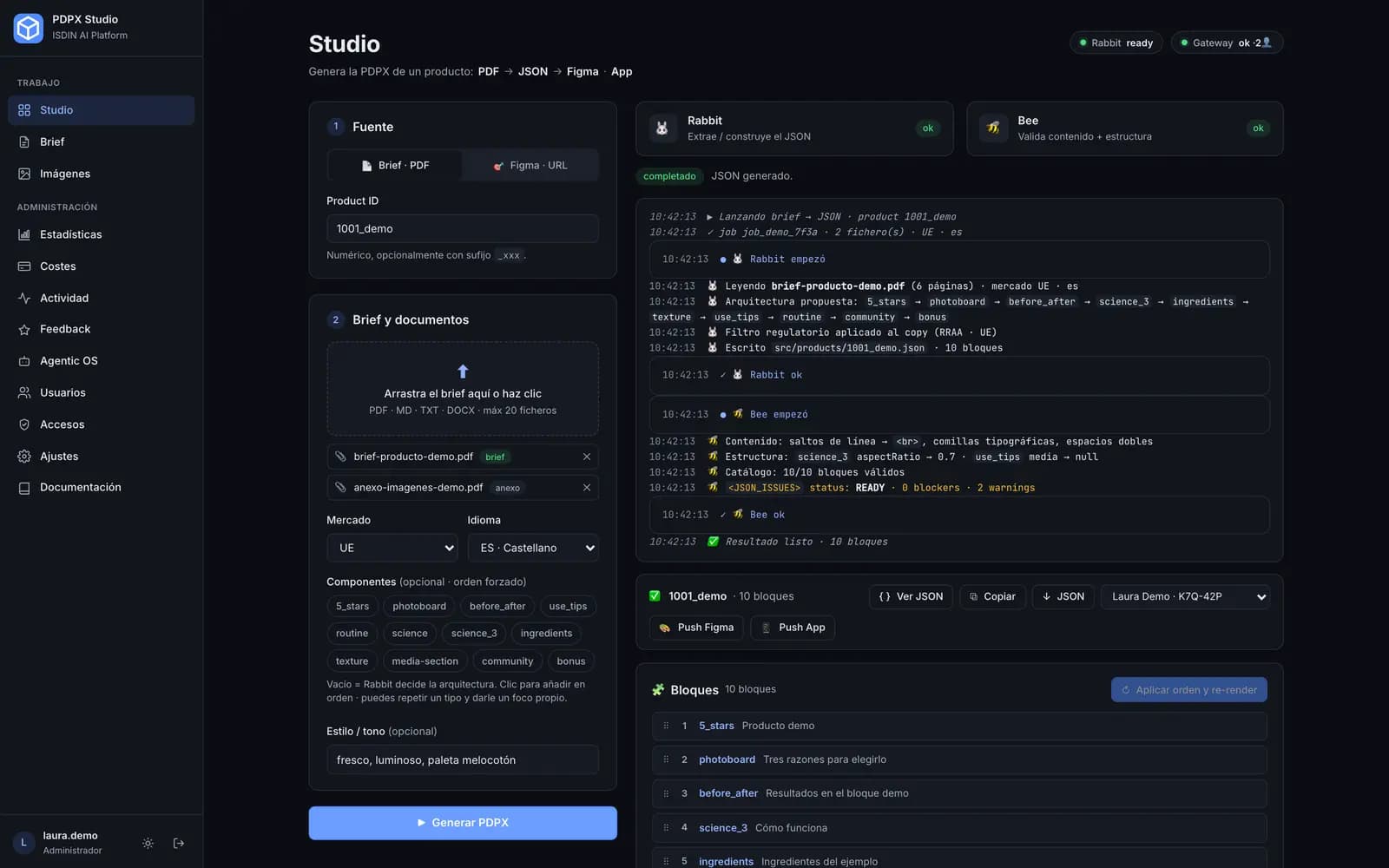
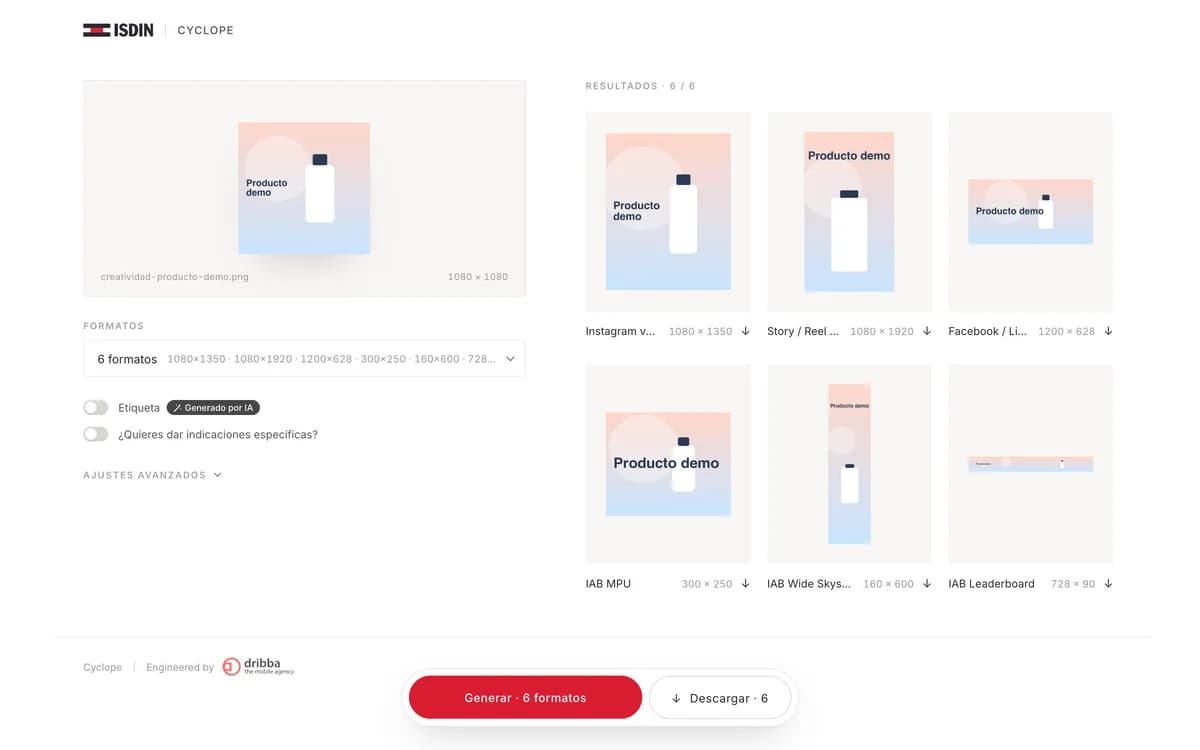
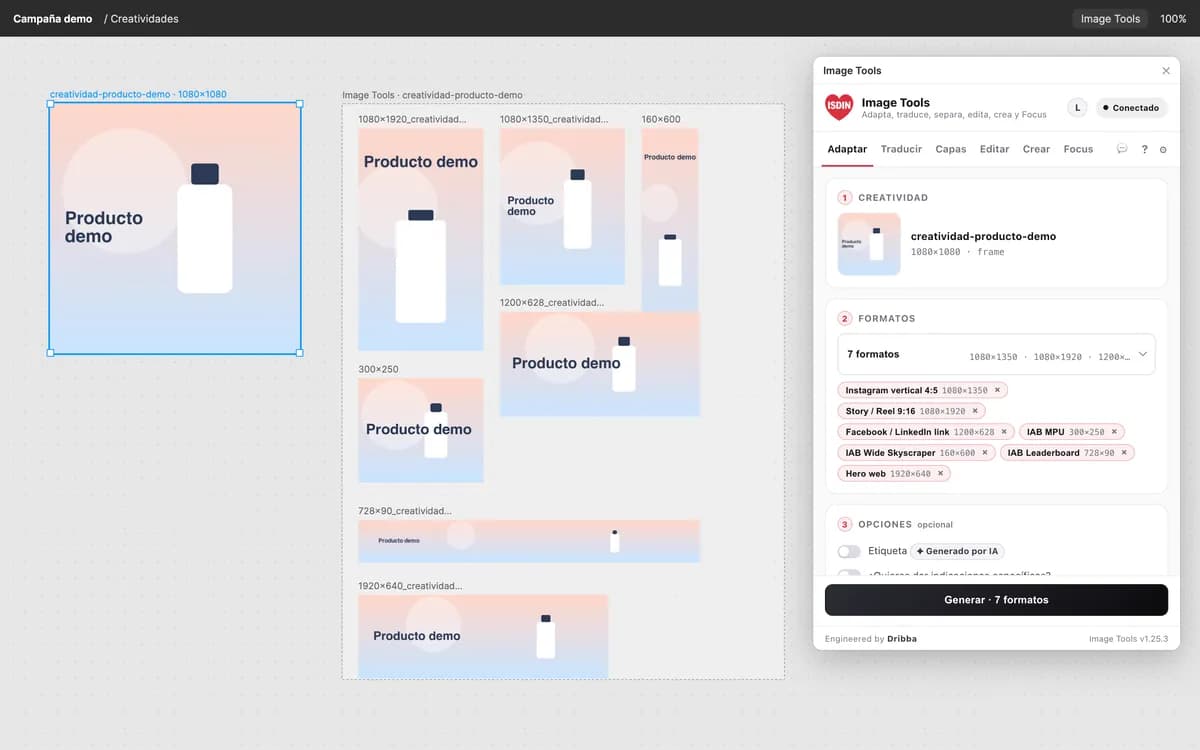
Screenshots use sample data.
How the seven agents share the work
- 01
Design extraction
Reads the Figma frame without a language model: what deterministic code can solve is not asked of a model.
- 02
Validation
Checks content, structure and catalogue before the rest work on the page.
- 03
Translation and copy
Adapt the text to each market.
- 04
Medical affairs and header
Review the scientific angle and prepare the page header.
- 05
Regulatory review
Checks every text against 13 regulations from different markets before publishing.
Why it is built this way
A single model with one long prompt does not work for a job with this many constraints. Splitting it into agents with one task each lets every step be tested on its own, shows where a page fails and lets one agent change without touching the others.
Deterministic work goes in code. Design extraction uses no language model, and structure and catalogue checks happen before anything is generated: the model works on data that has already been checked.
The platform lives where the team works. For design, almost everything is inside Figma: plugins to create and publish product pages, Cyclope to adapt one creative to every campaign format, and Image Tools to edit and translate images.
Questions about the case
It is the AI platform ISDIN's digital team uses, built with Dribba. It started by producing validated, translated product pages from a Figma frame or a PDF brief, and has grown into campaigns, emails and landing pages.
Seven. One extracts the design without a language model, another checks content, structure and catalogue, and the rest handle translation, copy, medical affairs, the page header and the regulatory review, which checks every text against 13 regulations.
Yes. It has produced more than 890 product pages across 8 markets and ISDIN's digital team uses it daily, mostly from inside Figma.
Yes. The method is the one we use on every AI project: agents with one task each, deterministic work in code, explicit rules and reviews, and a person approving what gets published. A first process starts at €15,000 and goes live in 4-8 weeks.
Does your team repeat work like this every week?
Free 30-minute audit: we look at the process and tell you whether agents make sense for it, and how.